
West Point Two-Mile Run Along the Hudson
- ssmfleming
- Jun 26
- 3 min read
Real Places Behind THE QUEST OF KIP SAUNDERS

When I visited West Point twenty-five years after resigning from the Academy, I walked down to the site of the annual two-mile run. The course follows the Hudson River alongside the railroad tracks. Every year, cadets must complete the Army Physical Fitness Test, which, in my day, consisted of push-ups, sit-ups, and the two-mile run. Readers of THE QUEST OF KIP SAUNDERS will recognize this location.
As a young man, I had a few proud athletic moments: a high school state championship in swimming, walking onto the West Point swim team, and later receiving the Rookie of the Year Award from the Academy’s military triathlon club.
Yet none of those accomplishments stands out in my memory as much as one September afternoon in 1979.
That day I ran the two miles in 11 minutes and 7 seconds while wearing military boots.
For the entire week leading up to the test, my demanding squad leader had challenged me relentlessly. He called me a worthless plebe and insisted I was too weak to beat him.
When I crossed the finish line, I waited.
Several moments later, he came straining across the line, bent over with his hands on his knees, trying to catch his breath.
Part of me wanted to say, "Look what your wimpy plebe did, sir."
But I didn't.
The victory itself was enough.
Only years later did I realize that, in his own hard-edged way, my squad leader had thrown down the gauntlet because he expected more from me than I expected from myself. That was his leadership style. Until then, I had taken every insult personally. After that race, my confidence returned—at least for a while.
After revisiting the course as a middle-aged man, I wandered over to nearby Eisenhower “Ike” Hall. During the academic year, cadets attend concerts, lectures, and dances there. I had always admired the enormous auditorium, said to be the second-largest theater on the East Coast after Radio City Music Hall in New York.
The building was closed, but one of the doors had been left unlocked.
Curiosity got the better of me.
The lights were off as I walked down the center aisle and climbed onto the stage. Standing alone in near darkness, I looked out over hundreds of empty gray seats and imagined the entire Corps of Cadets waiting for me to speak.
I cleared my throat and confidently recited an old anonymous verse I had learned after resigning:
Never say “die,” say “damn.”
It isn’t classic,
It may be profane.
But we mortals have need of it time and again;
And you’ll find you’ll recover from Fate’s hardest slam,
If you never say “die”—say “damn.”
The audience sat in stunned silence.
Not a single person applauded.
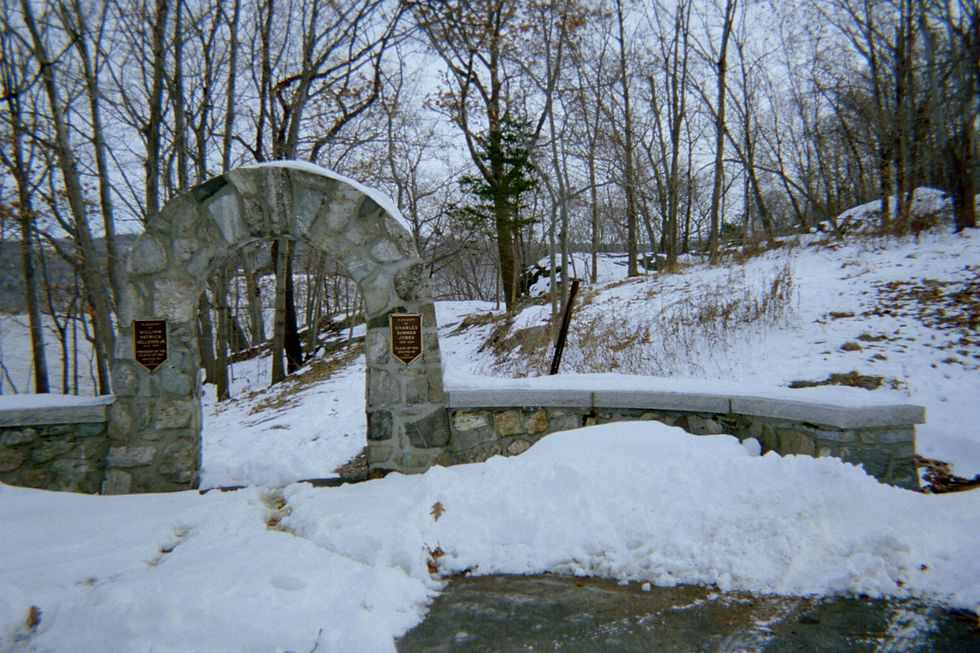
So I bowed anyway, walked off the stage, stepped back into the snowy air, and continued along Flirtation Walk.
That stretch of road beside the Hudson was more than a fitness course. It became a place where I discovered something about confidence, perseverance, and the power of believing in yourself—lessons that eventually found their way into THE QUEST OF KIP SAUNDERS. Sometimes the places we remember most are not where we earned medals, but where we discovered who we were becoming.


Comments