
Taking Boards at West Point
- ssmfleming
- 2 days ago
- 3 min read
Life Behind THE QUEST OF KIP SAUNDERS
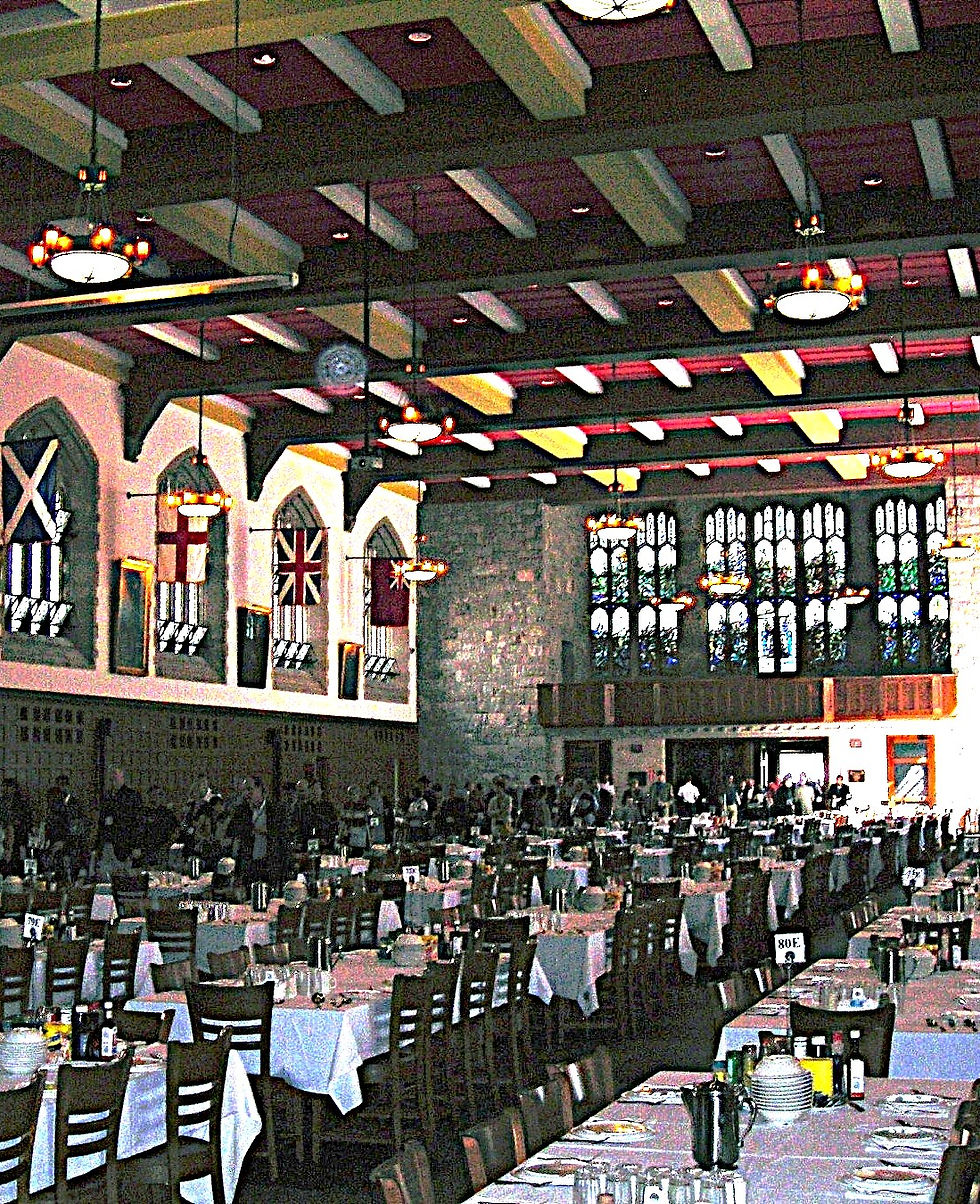
I’ll admit it. One of my most terrifying experiences at West Point was not being hazed by upperclassmen. It was not jumping out of airplanes when I was sent to Fort Benning, cutting seven equal slices of pie in the Mess Hall while my squad leader breathed down my neck, or being ordered to remove my protective mask in the gas chamber during Cadet Field Training at Camp Buckner.
No, none of those topped the list.
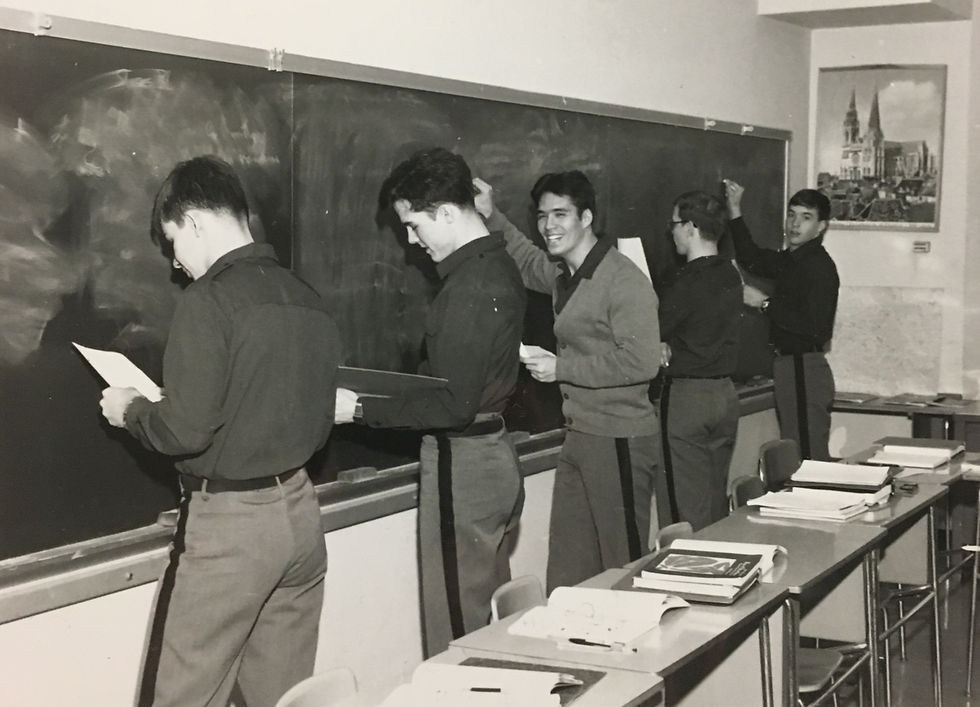
One of the most uncomfortable, stomach-churning experiences occurred in the classroom when a military instructor gave the command, “Take boards!”
Those words were especially frightening when I didn’t understand diddle squat about what the instructor had been explaining—and was then expected to solve a problem on the blackboard.
Most classes at West Point consisted of about twelve cadets seated at desks arranged in a U-shape, with the instructor standing behind a lectern at the open end. With such a small student-teacher ratio, there was nowhere to hide. Every cadet had to participate.
The instructor began each class by signaling the alpha cadet, who sat at one end of the formation. The cadet called the class to attention, saluted the instructor, and reported accountability.
Chalkboards covered all four walls. After a short lecture and demonstration, the instructor required us to apply what had just been taught. On command, we stood and moved to our assigned boards with our backs to the instructor. Looking around was forbidden, lest the instructor suspect an Honor Code violation. Using white chalk on an old-fashioned blackboard, each cadet attempted to work out the assigned problem before time expired.
Then the instructor selected someone to explain the solution.
“Cadet Fleming, present your answer.”
Those were words I dreaded, sweated over, and occasionally cursed under my breath.
Many times, I had the wrong answer—or, worse, no answer at all. Before I could address my classmates with my confused solution, the instructor would inevitably add, “Use the pointer to instruct, Cadet Fleming.”
I would pick up the long wooden pointer—which made me wish it were a pool cue instead—and begin by restating the problem. Then I would stumble through the process of explaining my convoluted reasoning.
Cadets were expected to conclude their presentations by asking, “Are there any questions?”
Because I usually had so little worth explaining, my conclusion often followed almost immediately after my introduction.
There was, however, one exception to my sometimes inadequate performances at the boards: French class.
I had taken four years of French in high school. Instead of testing out of the subject completely, however, I was placed in French 201 at West Point. Go figure.
Whenever my French instructor commanded, “Take boards, Cadet Fleming,” I practically rejoiced. No problem. No sweat. I knew the answers. Going to the board in French class often meant conjugating a verb, something I could do with confidence. It also helped that I liked the instructor, a kind female Army captain who did not seem interested in terrifying anyone.
Readers of THE QUEST OF KIP SAUNDERS may recognize the scene in which Kip is ordered to take boards. Anyone who has ever been called upon to explain something he or she barely understands can probably relate to his discomfort.
As a high school teacher, I now understand the reasoning behind the West Point method. The instructor explains a concept, demonstrates it, and then requires the students to apply and defend what they have learned. It is effective teaching, even when it makes an eighteen-year-old cadet wish he could disappear into the floor.
Looking back, I probably was not as deficient as this account makes me sound. I was young, immature, shy, and perhaps far too sensitive about making mistakes in front of others. What frightened me most was not necessarily getting an answer wrong. It was having everyone see me get it wrong.
West Point did not permit cadets to hide behind silence. We were expected to know the material, explain our reasoning, and perform under pressure. Taking boards taught us that leadership requires more than possessing an answer. A leader must be able to stand before others, point to the problem, and explain what should happen next.
Sometimes that lesson began with a piece of chalk, a wooden pointer, and the terrifying words, “Cadet Fleming, present your answer.”


Comments